

Haiti, once the Pearl of the Antilles, is marked by poverty resulting from political and strategic choices. This article traces the impact of foreign interference on the country’s instability. It analyzes the mechanisms of corruption linked to international cooperation, which amplify challenges rather than resolve them, and sheds light on the geopolitical dynamics shaping Haiti’s current situation.
Comment le peuple haïtien peut-il être privé de sa souveraineté, de son identité et de sa dignité en toute impunité ? Comment peut-on regarder le pays sombrer les bras croisés avec des vagues excuses ? Comment les médias peuvent-ils taire ou falsifier la vérité ?
La réalité du peuple haïtien questionne la notion même d’humanité.
Malgré les conditions difficiles, des femmes et des hommes courageux agissent chaque jour pour que le pays résiste et se développe malgré tout. Vous pouvez voir des exemples dans les parties interviews et projets de ce site. Les articles exposent de façon factuelle la réalité en Haïti. Les interviews et les projets apportent des pistes de solution ainsi qu’une vision nuancée et réaliste d’Haïti.
Setting the Context
The name Haiti, or Ayiti Kiskeya Boyo in Creole, is inherited from the island’s first inhabitants, the Arawak Indians and the Taínos. Some say it means High Land, others translate it as Mountainous Land.
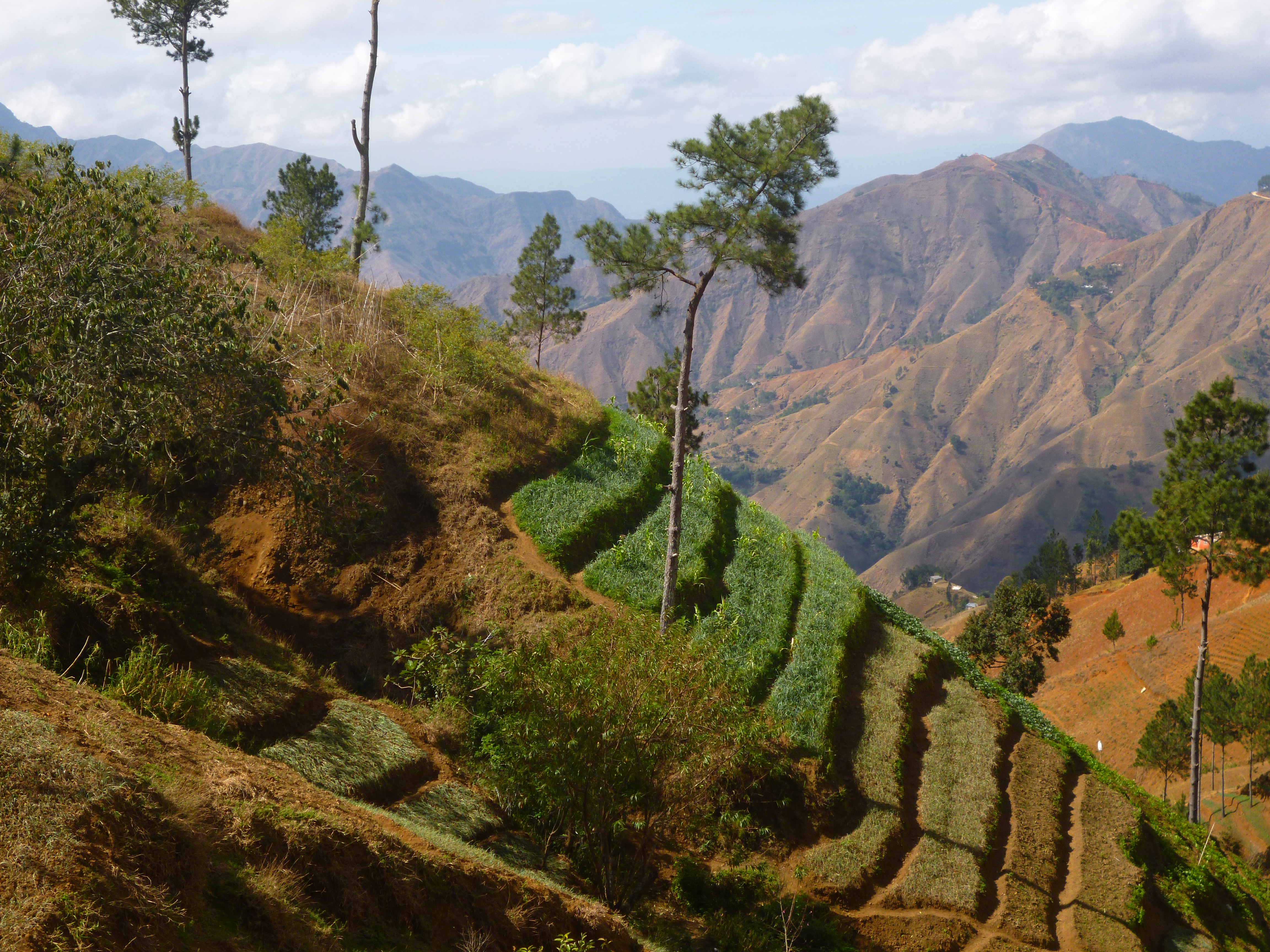
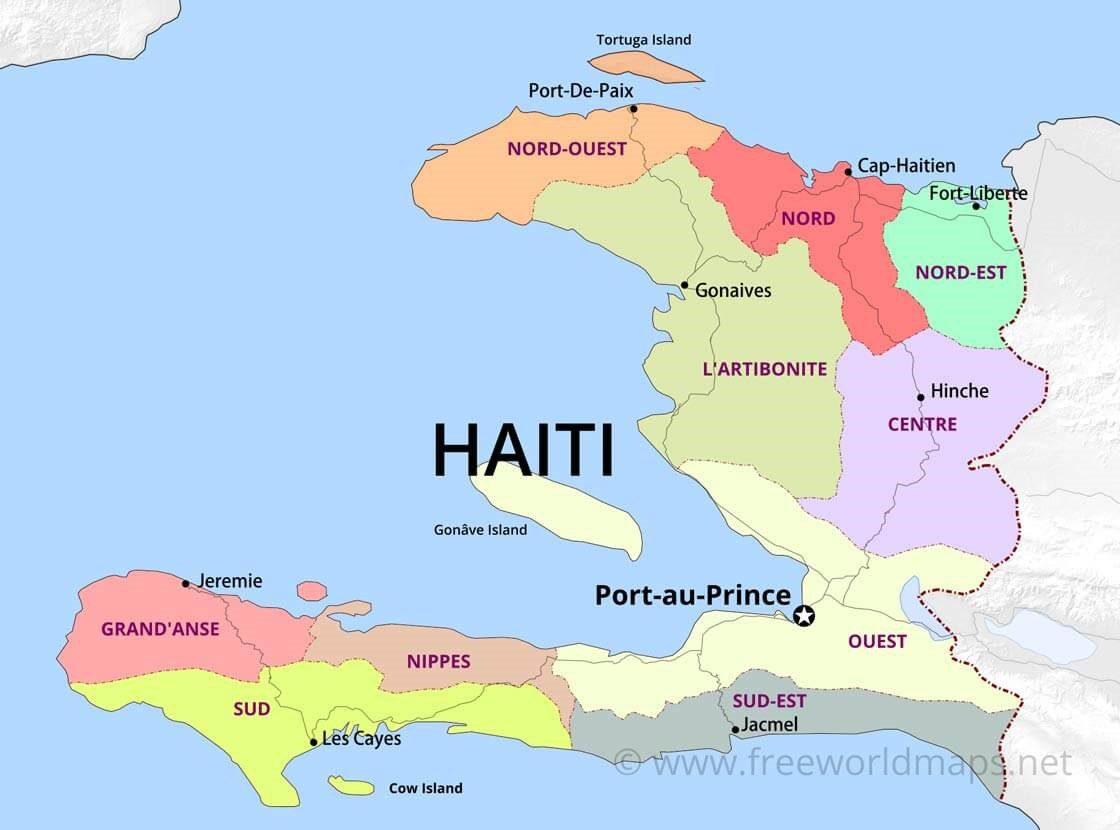
Haiti is part of the Greater Antilles archipelago, next to Cuba and Florida. It is a highly strategic location.

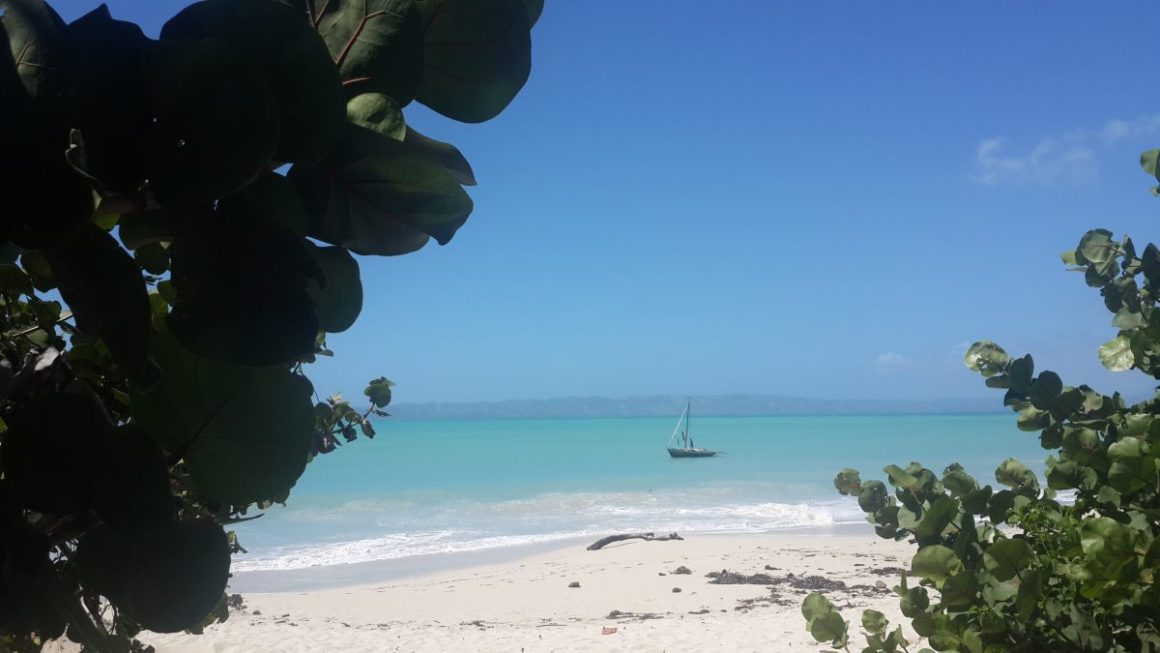
Did you know that Haiti was considered the Pearl of the Antilles by the West during colonization and in the 1960s by the tourism industry?
Did you know that Haiti was nearly self-sufficient in the production of basic foodstuffs until the 1970s?

This information is important because it shows a decline in Haiti’s situation at the end of the last century.
In fact, according to FAO data (United Nations Food and Agriculture Organization) and estimates from the World Food Programme (WFP), statistics show that Haiti still produced approximately 80% of its rice in the 1970s, before a drastic drop due to imports. Food self-sufficiency collapsed in the 1980s under Jean-Claude Duvalier and after his fall in 1986. Under pressure from international institutions (IMF, World Bank), liberalization policies such as the reduction of tariffs on rice (from 50% to 3% in 1987) were imposed on the Haitian population. Mass imports of American rice onto the Haitian market had a major impact on local farmers, making local production noncompetitive and contributing to the impoverishment of the entire country.
Haiti now imports more than 60% of its food needs, including more than 75% of its rice. Basic foods like cassava or beans are still produced locally, but in insufficient quantities to feed the population.
Our information work presents some analytical elements that enable us to make connections and thus achieve an overview.
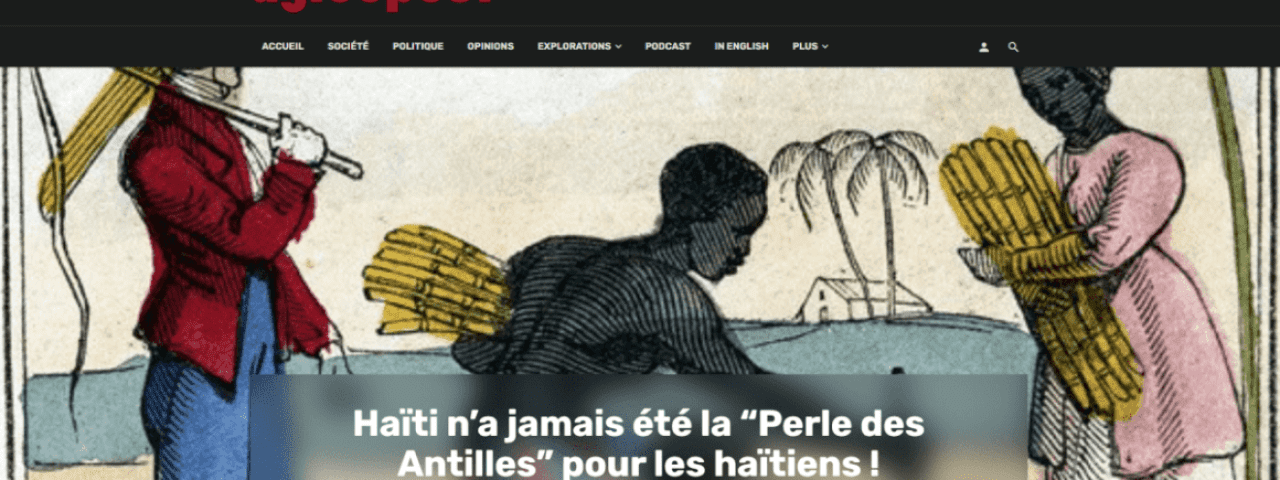
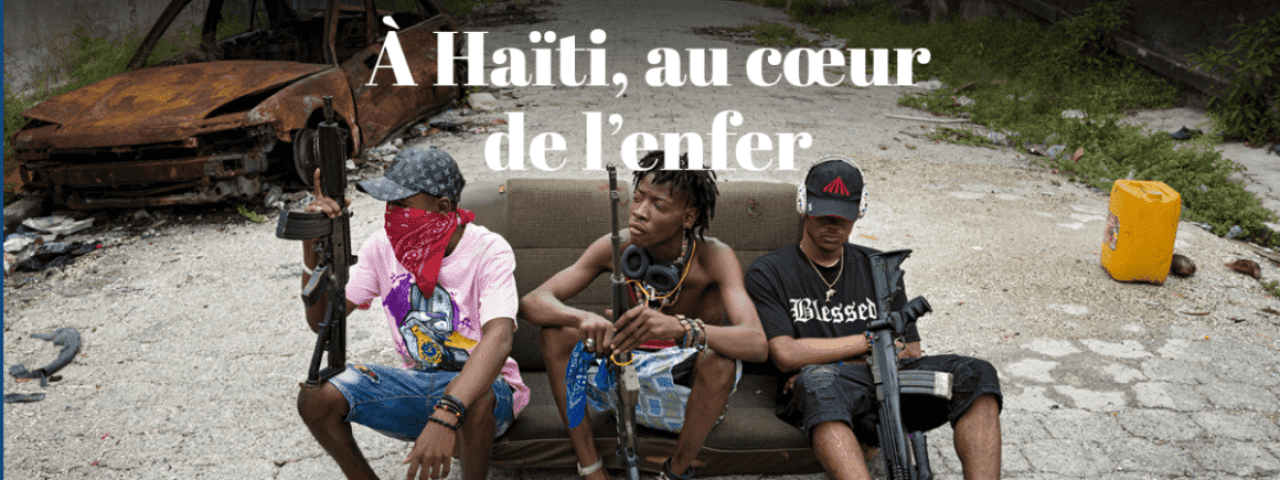
Some numbers to give us an idea
The way the international community treats Haiti is the result of the negligence of the Haitian leaders. (François Nau, 2013)
What is officially said is that Haiti is the poorest country in the Latin America and Caribbean region and among the poorest countries in the world. According to World Bank data, in 2020 the country had a human development index ranking it 170th out of 189 countries. The 2012 poverty survey indicates that out of a population of approximately 11 million, more than 6 million Haitians live below the poverty line, and more than 2.5 million are below the extreme poverty line. Haiti is the only state on the American continent that is part of the group of least developed countries (LDCs, UN classification).
The recent succession of crises—the COVID-19 pandemic, the assassination of President Jovenel Moïse, and the August 2021 earthquake—has intensified poverty. Haiti is also among the most inegalitarian countries in the region. This is largely due to two-thirds of the poor living in rural areas and unfavorable conditions for agricultural production, creating a welfare gap between urban and rural areas. The richest 20% of its population hold more than 64% of its total wealth, while the poorest 20% possess less than 1%.
Regarding human development, infant and maternal mortality remain at high levels, and coverage of preventive measures is stagnating or declining, particularly for the poorest households. According to the Human Capital Index, a child born today in Haiti will only reach 45% of the development potential they could achieve if they had benefited from complete education and health care. More than one-fifth of children are at risk of cognitive and physical limitations, and only 78% of 15-year-olds will survive to age 60.
These figures bear witness to severe dysfunctions.
General Dysfunction of Public Institutions


The Independence Period
Since 1804, political choices and persistent institutional weaknesses have shaped the Haitian state’s responsibility for the loss of sovereignty, alienation, poverty, and violence. After the war of independence, Haiti inherited a ruined economy and a society divided between mulatto elites and Black masses.
At that time, the Haitian state made two major decisions that launched a dynamic of instability.
First, after independence, the state relied on an authoritarian and military structure. This militarization, a source of internal power struggles, fostered personal or factional power among elites and military leaders, where violence serves private interests rather than the public interest. The absence of centralized power prevented the construction of civil institutions. This laid the groundwork for an oppressive and arbitrary state that was illegitimate in the eyes of the population. (Sauveur Pierre Étienne, L’énigme haïtienne, 2007).
Second, in 1825, the state agreed to pay a debt of 150 million francs to France for its official recognition, financed by costly loans. This decision mortgaged Haiti’s economy, diverting resources from public institutions. (Mats Lundahl, 1992)
The 20th Century
During the American occupation from 1915 to 1934, the price to pay for the Haitian state’s institutional weakness was the mortgaging of the Haitian people’s sovereignty. Dartiguenave, the president at the time, signed the Haitian-American treaty in 1916, which gave the United States control over Haitian finances, the creation of a gendarmerie (a police force that is part of the armed forces) led by American officers, and a right to interfere in public affairs.
The Haitian elites also played a role in this cooperation by continuing to manage local institutions under American supervision to preserve their positions and privileges.
In 1917, when Parliament refused a constitution drafted by the United States, Dartiguenave dissolved the assembly under pressure from the Marines. This constitution, adopted in 1918, authorized foreign land ownership, a major change from the prohibition established by Dessalines in 1804 to protect Haiti’s sovereignty. Sauveur Pierre Étienne analyzes this period as a reinforcement of external dependence.
Under the Duvalier dictatorship, from 1957 to 1986, the state imposed centralization of power through the institutionalization of violence and impunity via a paramilitary militia. The embezzlement of public funds, massacres of the civilian population, repression of opponents, and the forced exile of thousands of Haitians ruined the economy, hindered development, precipitated the destruction of institutions, and weakened Haiti in the face of future crises. Amnesty International documents these facts in “Haiti: You Cannot Kill the Truth – The Jean-Claude Duvalier File” (2011).
In 1986, the fall of the Duvaliers could have opened a period of transition to democracy. Étienne (2007) describes a fragmentation of elites and coups d’état that prevented the consolidation of a modern state. Successive governments fueled corruption by embezzling resources instead of investing them.
The 21st Century
More recently, under the presidency of Jovenel Moïse (2016–2021), the Haitian state was responsible for serious violence by establishing collaboration with armed gangs to suppress opposition and demonstrations demanding accountability for the embezzlement of 1.5 billion euros from the PetroCaribe fund, which weakened public services. Jovenel Moïse dissolved Parliament in 2020, governed by decree, criminalized protests, and blocked investigations, while the impunity of those responsible for massacres and corruption reinforced violence and insecurity.
The report Killing with Impunity: State-Sanctioned Massacres in Haiti (IHRC/OHCCH, 2021) and the CETRI article “Haiti: Power Between Massacres and Impunity” (2020) confirm these facts.
After Moïse’s assassination in 2021, the state completely collapsed. The report shows that the Haitian National Police were either powerless or complicit in the face of gangs. The judicial system, paralyzed by corruption and lack of resources, maintained impunity, leading to endemic violence and an unprecedented humanitarian crisis.
In Conclusion
The responsibility of the Haitian state lies in its historical inability to overcome its colonial legacy and internal divisions to establish a sovereign and prosperous state. From the debt of 1825 to complicity with gangs in 2019, political choices marked by corruption, repression, and dependence have prevented economic and social development while fueling a cycle of violence and impunity. This structural weakness, aggravated by recent crises, renders the state virtually nonexistent in the face of current challenges.
The consequences are all the more serious because for two centuries, having neither built solid institutions nor responded to the needs of the population, the impacts of underdevelopment—characterized by poverty, illiteracy, and violence—leave a void that amplifies the effects of foreign interference.
For more information on the dysfunctions of Haitian institutions, I invite you to watch the interview with Maître Yvon Janvier.
Dysfunction of the International Cooperation and Humanitarian Aid System
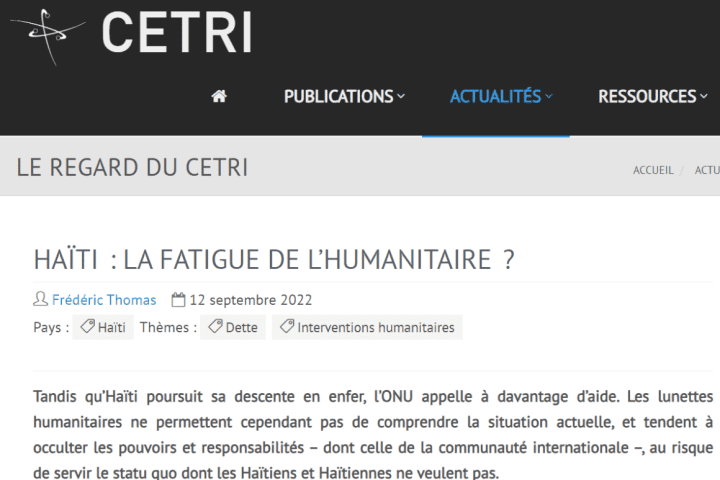
Corruption is a well-documented problem in the humanitarian and development sector. There are numerous reports, audits, articles, testimonies, etc.
Dysfunction of National and International Justice
For more information on justice dysfunctions in Haiti, I invite you to watch the interview with Maître Yvon Janvier.
Dysfunction of the Media and Information System
This last one is as serious as the others because it hides the crimes committed by omitting to clearly state how poverty works and by covering for the main actors.
Poverty is the Result of Political and Strategic Choices
The debt system leads to corruption.
Corruption leads to alienation.
Alienation leads to poverty.


When you dig a little deeper, you realize that there is no inevitability in this situation and that poverty, violence, and misery are the consequences of debt, globalization policy, and free trade implemented in the early 1980s. Haiti was one of the first countries to implement the recommendations of the IMF (International Monetary Fund) and the World Bank in line with the comparative advantage theory. Indeed, since the early 1980s, under Jean-Claude Duvalier’s government, the country began to take an economic turn that had a major impact on agriculture. In the late 1980s, a number of American economists and major international institutions decided to force all countries needing to borrow money to adopt their free trade and globalization policies. These economists defended the comparative advantage theory stipulating that each country should concentrate its production in areas where it is most competitive with products that can be sold everywhere. (Chancy, 2020)
The debt that was raised coupled with the free trade strategy had a devastating impact on Haiti’s economy because “liberalizing means forcing developing countries to abandon all forms of protection for their economy.” (Millet & Toussaint, 2011). Thus, “despite their countless natural and human riches, the peoples of the Third World are being bled dry. Repayment of a debt that has become colossal deprives them of satisfying the most basic needs. Debt has become a very subtle mechanism of domination and the means of a new colonization. The policies applied by indebted governments are more often decided by creditors than by the elected officials of the countries concerned. The loans raised by the leaders of Southern countries have benefited populations very little. The majority were raised by dictatorial regimes, strategic allies of major Northern powers. (…) A significant part of the borrowed sums was diverted by corrupt regimes. They accepted indebtedness all the more easily because they could collect commissions along the way with the support of other actors in indebtedness. (…) In Haiti, in 1986, the external debt amounted to 750 million dollars when the Duvalier family, which ruled with an iron fist for thirty years (first François—known as Papa Doc—then Jean-Claude—known as Baby Doc), fled to the French Riviera with a fortune estimated at more than 900 million dollars.” (Millet & Toussaint, 2011).
For Brodeur (2012), these economic policy choices resulted in a high level of corruption. “Haiti currently ranks (…) among the ten most corrupt countries in the world. This is far from an enviable situation and one that the country must tackle to ensure its development. (…) Corruption is a scourge that has, over the decades, gradually become institutionalized in Haiti. These are no longer isolated acts, but generalized acts that, until recently, were socially accepted or tolerated, with considerable repercussions.
Currently, several factors contribute to the reinforcement of corruption in Haiti. On the political and administrative levels, the system can be seen to have many flaws. For example, the head of state has ‘unchecked power [that] transforms him into a dispenser of advantages and privileges to his supporters (…). So that the closer political officials are to him, the more tempted they are to profit from their position for personal enrichment.’ This is ‘all the easier because the system has always operated without transparency in resource management and without respect for established rules.
The bodies supposed to control public spending […] are largely under government control’ (Cadet, 2008, p. 72 in Brodeur, 2012). And it unfortunately seems that this management philosophy has permeated all levels of government and public administration. Lack of transparency, the centralization of decisions, disregard for rules—these are practices contrary to good governance principles that contribute to maintaining and reinforcing corruption.” (Brodeur, 2012).
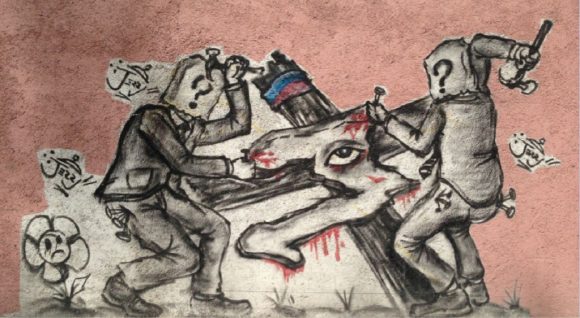
Understanding how countries lose their sovereignty
To better understand the reality of so-called developing countries—which I personally call “countries whose development is prevented for the profit of certain unscrupulous actors”—here is the documentary based on the book The Shock Doctrine by Naomi Klein, in which she argues that free-market capitalism has spread through shocks and crises, often violent, to gain acceptance for unpopular policies.
This author presents disaster capitalism and asserts that neoliberal policies, such as deregulation, privatization, and cuts in public spending, are often implemented during or immediately after major shocks such as wars, natural disasters, or economic crises. These moments of collective disorientation allow decision-makers to impose radical reforms quickly, before the public can fully understand or oppose their consequences.
She exposes the role of the Chicago School, particularly the ideas of Milton Friedman, in developing and promoting this strategy. Friedman and his disciples advocated using crises as opportunities to implement free-market reforms, arguing that only a shock could break resistance to these changes.
Her book also points to the CIA’s operation and how the deep state destabilizes and controls countries, notably mentioning US. and CIA support for Pinochet’s coup in Chile to install policies inspired by Milton Friedman’s Chicago School. She also describes systemic alliances between governments, economic elites, international institutions (like the IMF), and private interest groups to impose neoliberal policies during crises against the will of the people.
Naomi Klein examines several case studies where the shock strategy was used. These include Chile after Pinochet’s coup, Russia after the fall of communism, the Asian financial crisis of the late 1990s, and New Orleans after Hurricane Katrina. In each case, she argues that crises were exploited to advance corporate interests and implement policies that benefit a minority at the expense of the majority.
Naomi Klein’s analysis explains what lies behind the word “democracy” in mainstream media. When they talk about “threat to democracy,” “measures to maintain democracy,” “anti-democratic country,” etc. She argues that, according to certain promoters of this doctrine, democracy and neoliberalism support each other. However, according to her analysis and research, the imposition of neoliberal policies has always been done in fear and bloodshed through coups d’état, the elimination of opposition, or the imposition of a state of emergency. She cites as examples the dictatorships of Pinochet in Chile and Suharto in Indonesia, as well as post-Eastern Bloc liberalizations in Poland and Russia, Margaret Thatcher’s government in the United Kingdom, and the end of apartheid in South Africa.
When the earthquake hit Haiti, Klein applied her theory to this situation. She points out that after this disaster, some immediately sought to profit from the situation by proposing economic reforms. She published several articles, including “Haiti Disaster Capitalism Alert: Stop Them Before They Shock Again.”
Naomi Klein calls for resistance and the creation of alternatives, emphasizing the importance of popular resistance and social movements to counter the shock strategy. She argues that awareness and organization are essential to defend against the imposition of neoliberal policies in times of crisis.
A Heavy Legacy…
To understand Haiti’s situation, it is essential to mention the independence debt that the Republic of Haiti had to repay from 1883 to 1952. An illegitimate debt.
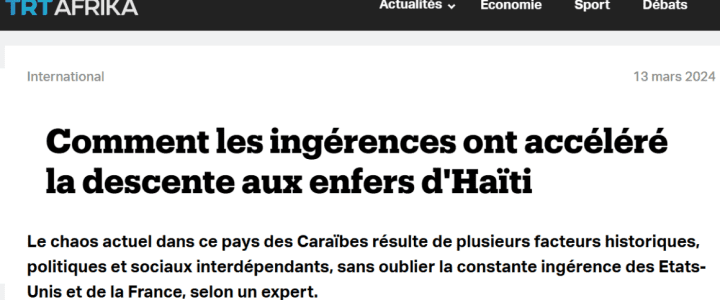
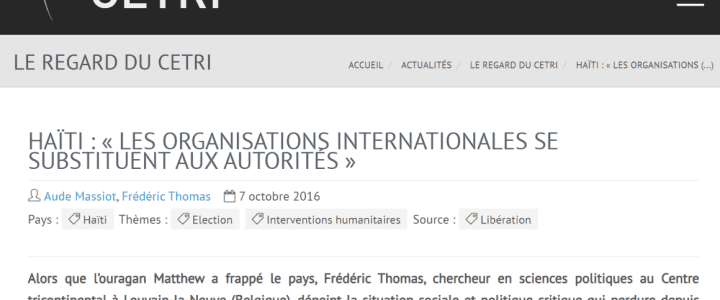
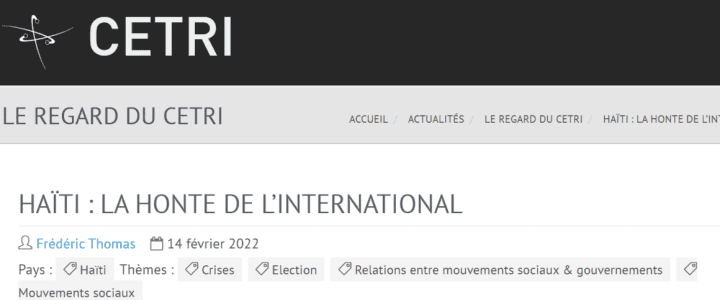
As Frédéric Thomas explains, the analysis of this debt “highlights the structural weight of French and American interference in the causes of the underdevelopment of the former ‘pearl of the Antilles.’ Without denying the responsibility of the Haitian elite, which was predatory and corrupt (…) The first independent (Black) nation in 1804, following a revolution by former Black slaves who drove out the French occupier, the country, unrecognized by other states, was summoned twenty-one years later, under threat of war, to pay ‘indemnities’ to former slave owners. The investigation (by the New York Times) clearly demonstrates the mechanics and disproportionate dimension of these ‘reparations.’
We’re talking about a double debt here: to pay this, Haiti had to borrow money from French banks… and therefore repay the interest. The country is thus trapped in what economist Thomas Piketty called ‘debt neocolonialism‘ [2]. Especially since after the debt (not the interest) was repaid in 1880, the National Bank of Haiti was created. However, it was actually in the hands of economic actors, first French—the Crédit Industriel et Commercial (CIC), now a subsidiary of Crédit Mutuel—then American—the National City Bank of New York, the ancestor of Citigroup—which siphoned off the funds.
(…) Evaluated in current monetary value at 560 million dollars (525 million euros), it ‘absorbed an average of 19% of Haiti’s annual revenues, even more than 40% in some years.’ But in reality, the loss is even greater; if these millions had been invested in the country’s economy, ‘instead of being sent to France without goods or services in return,’ they would, in the long run, the American newspaper calculates, have generated 21 billion dollars for Haiti [3]. Moreover, this debt constitutes a doubly unprecedented fact: it was the former slaves, the victors, who had to pay reparations to the defeated former slave owners, to compensate for the ‘misfortunes of the former colonists of Saint-Domingue.'”
He concludes by saying: “Beyond recognition, apology, and reimbursement by France, reparation requires a change of direction and vision on its part. The debt is a political fact rather than a historical episode. It is therefore not only about questioning the legacy of this ransom, but also and above all its reproduction through the alliance of the local oligarchy and international diplomacy. And no longer silencing present injustice under the demonstration of past tyranny.”
To understand the ins and outs, I invite you to watch Jean-Marie Théodat’s conference titled The Haitian Debt.
Humanitarian aid and corruption don’t mix well…
The term NGO first appeared in the United Nations Charter in 1945.
In theory, NGOs and nonprofit associations present themselves as alternatives or complements to the state and the market, with missions often focused on the general interest, solidarity, or causes that neither the state nor the market fully address. In practice, these organizations struggle to completely escape the influence of the state and the market, even though their raison d’être is to distinguish themselves from them. Their independence remains relative, and their actions in the field often reflect a compromise between their ideals and the constraints of the system in which they operate. Thus, achieving complete independence from the state and private companies is extremely difficult in today’s world and remains a structural challenge for NGOs and associations.
Jean-Marie Pierlot explains that some authors prefer to use other denominations: “Florine Garlot refers to ‘international solidarity associations’ (ISAs) (…). As for Eric Dacheux, he intends to rethink NGO communication by renaming them ‘social movement organizations‘ (SMOs).” According to these authors, “because of their negative denomination, the labels of non-governmental organization or nonprofit association are magnetically drawn to the state/market coupling from which these organizations are supposed to distinguish themselves. In contrast, self-organized citizen movements, SMOs, develop capacities for action that reinforce the autonomy of social actors, without referring in any way to this polarity unsuited to their communication. (…) When they find themselves, indeed, ‘caught between the hammer of economic globalization and the anvil of state instrumentalization,‘ their identity risks being mistreated.”
The concrete implications in the field translate into several observable dynamics:
- Financial dependence: Many NGOs or associations depend on public subsidies or partnerships with private companies. For example, an environmental NGO may receive funds from a ministry for a campaign, or a charitable association may collaborate with a large company to raise donations. This dependence limits their ability to completely deviate from state or market logics.
- Pressure to adopt performance logics: To obtain this funding or to legitimize their existence, these organizations must often comply with requirements similar to those of the market (efficiency, performance indicators) or the state (bureaucracy, compliance with public policies).
- Ambiguous positioning: Their “negative” identity makes them vulnerable to fuzzy perception. In the field, an NGO can be seen as a state subcontractor or as a quasi-commercial actor (if it sells products to finance its activities). This blurs their specificity and can create tensions with beneficiaries or activists who expect a more radical or independent stance.
- Competition and alignment: In an ecosystem dominated by the state and the market, these organizations sometimes compete for resources or visibility, adopting strategies similar to those of companies (marketing, professional communication) or modeling themselves on current political priorities to remain relevant.
Development cooperation and humanitarian aid, often piloted or influenced by states through agencies like USAID, the European Commission, or ministries and international organizations, can be perceived as having ambiguous positions regarding democratic processes. They promise to help populations, but their implementation can sometimes reinforce dynamics contrary to democracy, especially when corruption comes into play.
Jean-Marie Pierlot points to a fundamental opposition, namely on one side, a citizen will to strengthen participation, freedom, and autonomy of populations in decisions that concern them (expanding democratic space) and on the other, state control, which, through its laws, institutions, or interests, seeks to limit this space to preserve its power or that of its allies (often in connection with economic actors).
“This approach highlights the tension that can arise between the citizens’ will to increase populations’ democratic space and the grip of state powers that tend to reduce it. Tolerating at most the existence of associations ready to make up for its shortcomings in solidarity with the most precarious populations, the ‘strong’ state protects itself by discrediting and threatening exclusion of citizen organizations that might shake the regime’s stability by not putting themselves at its service. By contrast, countries like Haiti or Lebanon, whose government is plagued by corruption, struggle to ensure the vital security of their populations, especially after a disaster like an earthquake (…). NGOs then fill the void left by the failure of these states by responding in their place to the demands of populations left in misery. They can then be accused of exceeding their prerogatives or even substituting for state institutions in sectors not officially allocated to them (Lebanese president’s statement in 2022). In Haiti, the NGOs present must respond to such enormous needs that they become uncontrollable. Lafontaine Orvild denounces the fact that a majority of them then drift toward lucrative activities and convert into private firms, attracted by profit.” (Pierlot, 2022)

Corruption in humanitarian aid, an anti-democratic factor
Corruption is a well-documented problem in the humanitarian and development sector. It can take several forms:
- Embezzlement of funds: For example, according to a ProPublica and NPR report (2015), the American Red Cross collected 500 million dollars for Haiti after the earthquake, promising to build hundreds of homes when only 6 houses were actually built. The money was eaten up in administrative costs, expatriate salaries, and poorly managed projects, with little transparency about its actual use. A large part of the funds remained in the hands of international organizations or foreign subcontractors, never reaching local communities. Contracts were often awarded to American or Western companies without competitive bidding, favoring cronyism.
- Clientelism: Aid is sometimes distributed to favor local elites or corrupt governments, as shown in one of the post-2010 earthquake audits conducted by USAID’s Office of Inspector General (OIG), a large part of the budget allocated to reconstruction was paid to companies in the Washington, DC. region, which obtained 56% of contracts. For example, Chemonics, a major contractor, was paid hundreds of millions for housing or infrastructure projects, but few were completed. A residential neighborhood promised in Caracol, for instance, saw houses built without access to water or electricity, rendering the project unusable.
- Political influence: Donor states can condition aid on political or economic alignments (e.g., supporting authoritarian regimes in exchange for contracts for their companies).
These practices are frequent enough to raise questions. When aid is corrupted or poorly managed, it can have effects that disadvantage democratic processes:
- Reinforcement of undemocratic elites: If aid benefits authoritarian governments or local oligarchies, it consolidates their power at the expense of citizens. For example, after the 2010 earthquake, a report co-written by the Heritage Foundation for Haiti, Transparency International, and local NGOs collected testimonies reporting that community leaders or Haitian politicians demanded bribes to include certain families on beneficiary lists for food or materials. In Port-au-Prince, bags of rice stamped “USAID” were found on black markets, sold by corrupt intermediaries.
- Increased dependence: Populations become dependent on external aid rather than their own institutions, weakening their ability to claim rights or build local democratic systems.
- Deresponsibilization of beneficiary states: When humanitarian aid compensates for a government’s shortcomings (health, education), the latter can disengage from its obligations toward its citizens, thus reducing the space for democratic accountability.
Development Cooperation, For or Against the Haitian People?
Development cooperation, which includes longer-term projects (infrastructure, education, governance), is often presented as a means to strengthen countries’ capacities. But here again, it can pose problems:
- Imposed agenda: Priorities are often defined by donors (states or institutions like the World Bank), and local populations have no say.
- Bureaucracy and control: Aid structures are often heavy and centralized, leaving little room for citizen participation. This can stifle local initiatives that could emerge more organically and democratically.
Humanitarian aid and development cooperation, in their current form, often present themselves as an extension of state control and serve the geopolitical interests of donor states (e.g., maintaining influence in a region) and a paternalistic vision where “solutions” come from above (international NGOs, foreign experts) rather than from the populations themselves. In this sense, they influence democratic space by marginalizing local voices and maintaining unequal power structures, especially when corruption diverts resources toward non-representative actors. In many cases, corruption and the structures of humanitarian aid and development cooperation disadvantage democratic processes by reinforcing established powers at the expense of citizens’ will. In Haiti’s case, corruption in humanitarian aid is not an isolated incident but a systemic problem involving both local and international actors.
For more details, see Yvon Janvier’s article on corruption in humanitarian aid in Haiti.
Conclusion
This article highlights how the mechanisms of corruption coupled with those of debt and imposed neoliberal strategies can create endemic poverty. The role of international actors and the corrupt Haitian elite has allowed sovereignty to be removed from the Haitian people in just a few years.
What purpose can such a level of corruption serve?
Elements of answers are provided in the following articles.

Child trafficking via adoption in Haiti
Behind the desire to provide a home for a vulnerable child sometimes lies a far more complex reality. In Haiti, international adoption has developed within a context marked by political instability, extreme poverty, and institutional failures. Between the stated good intentions and documented abuses, this system raises essential questions: how do we distinguish between authentic […]

Regenerative and restorative pedagogy: The foundation of a new contract for cognitive justice
Abstract Regenerative and restorative pedagogy refers to a set of methods and knowledge aimed at regenerating ourselves, regenerating others, and repairing the past and present with a view to human, ecological, and planetary sustainability. It aims to reduce the processes of destructing the self, other humans, and non-humans. The main role of this alternative and transgressive pedagogy […]